Why more frequent turning is a good idea
Tags: Incubation | Whitepaper
, 12 January 2026
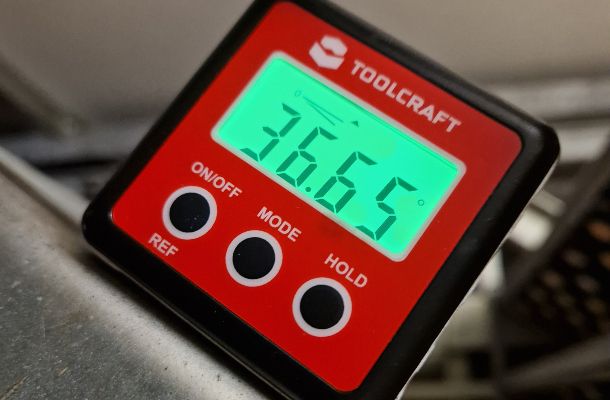
Hatchery professionals will agree: turning is a fundamental part of incubation. The movement of internal egg contents caused by turning prevents the embryo from sticking to the inner shell membrane. It also stimulates sub-embryonic fluid formation and ensures that the area vasculosa and chorioallantoic membrane (CAM) develop properly. This is important for the growth and development of the embryo, which depends on these extraembryonic membranes for nutrition and gas exchange.
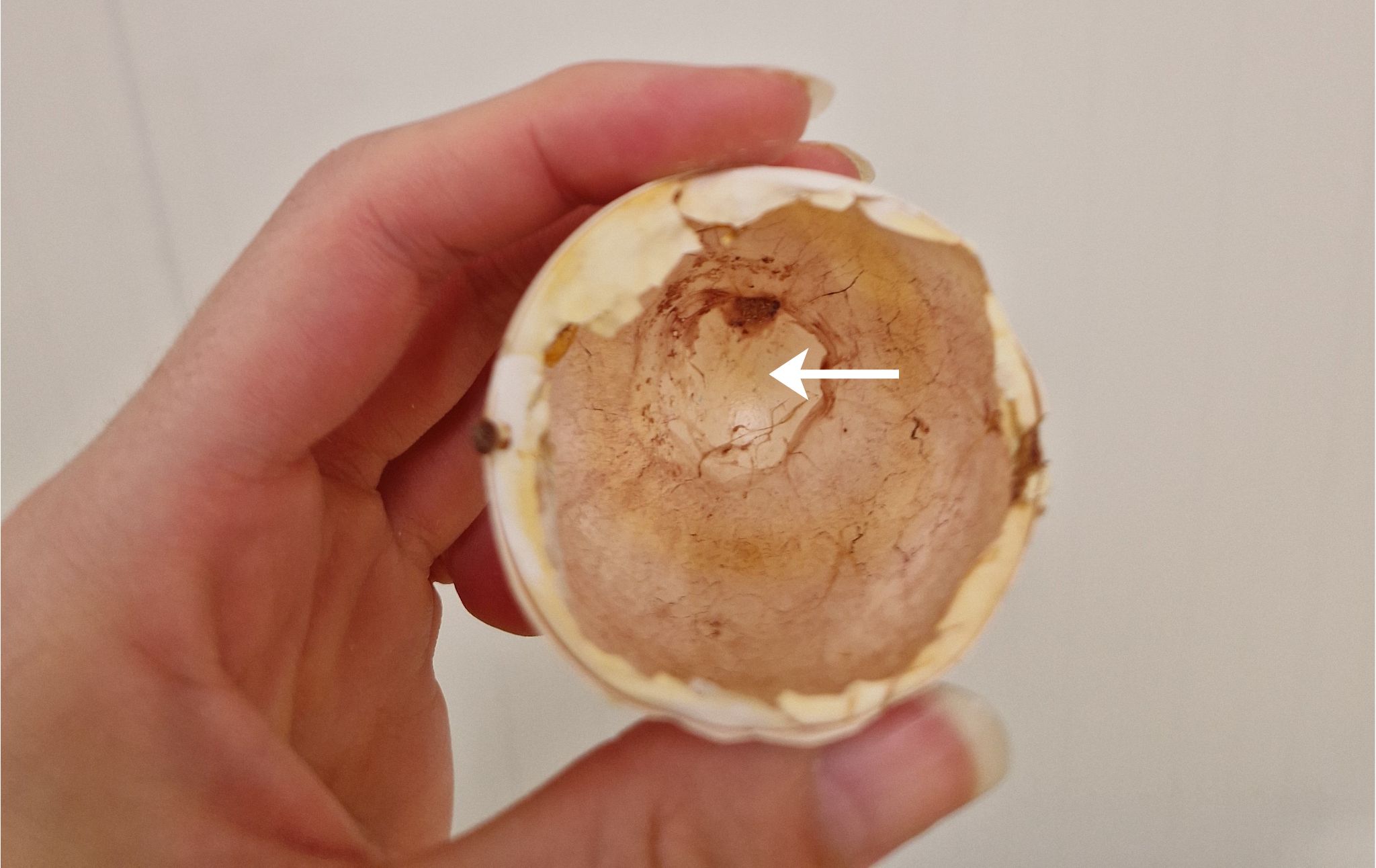
If the turning angle is suboptimal or the turning mechanism fails, signs of this will be seen in hatchability and chick quality reduction but also in the empty shells. Sub-optimal turning prevents the correct transfer from albumen to the amniotic liquid. Consequently, the sticky albumen content stays in the bottom of the egg and prevents the CAM from closing completely. This can be seen in the empty eggshells: the picture below shows where the CAM stopped developing, indicated by the arrow.
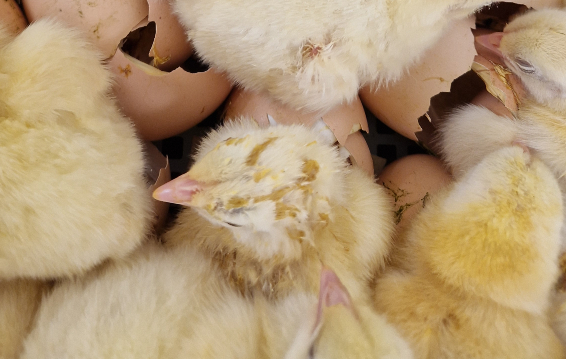
The remaining albumen may also stick to the chick’s down, sometimes with small parts of the eggshell still attached (sticky chicks).
It is generally accepted that turning once every 60 minutes, at an angle of at least 38 degrees, gives good hatch results.
Why increase the turning frequency?
Overdue or overlooked maintenance of the turning mechanisms, uneven floors and/or general wear and tear can cause turning angles to slowly decline. Once the turning angle drops below 38 degrees, hatch results will start to be negatively affected. Increasing the turning frequency to once every 15 minutes can partly restore the negative effects of a sub-optimal turning angle, for example by reducing malpositioned embryos (Elibol and Brake, 2006).
Another benefit of an increased turning frequency is related to the temperature distribution in the setter. When eggs are turned, the air flow over the egg changes. Turning therefore mitigates differences in hot and cold spots, creating a more uniform temperature distribution.
Advice
- Frequently check turning angles (at least once every 12 months) and adjust if necessary.
- If possible, increase the turning frequency from once every 60 minutes to once every 15 minutes.
- Look out for turning problems if you see sticky chicks and/or empty shells with an open CAM.
Written by Lotte Hebbink
Incubation specialist
I welcome your feedback on this article - and if you require any additional information, please don't hesitate to contact me.