Managing eggshell temperature for optimal hatchability and chick quality
Tags: Incubation | Whitepaper
, 16 October 2025
Besides the quality of the hatching eggs, hatch results largely depend on the temperature in the incubator. While the optimal eggshell temperature (EST) for chicken eggs is commonly agreed upon as 100°F throughout incubation, in practice achieving this target temperature for all eggs in an incubator is challenging.
Three different meanings of the word 'temperature'
For this reason, it is important to understand the relations between the air temperature measured by the temperature sensor in the incubator, the EST measured on the surface of the eggshell, and the embryo temperature (ET).
As ET measurement is invasive, the preferred method to estimate embryo temperature is to measure EST. The temperature difference (∆T) between the air temperature at the sensor and the EST and ET differs between incubator types and brands and is largely determined by the air speed over the eggs, the position of the temperature sensor, and the developmental stage of the embryos. In general, the higher the air speed, the smaller the ∆T. Each incubator manufacturer recommends specific incubation programmes according to their incubator design, and exchanging temperature settings between incubator brands is therefore strongly discouraged.
Biological differences: they matter!
Ignoring the differences in incubator design, the main reason for the ∆T between air and EST is that the embryos start to produce exponentially more metabolic heat after 13 days of incubation. This means that the incubator’s air temperature must be lowered accordingly to maintain the EST at 100⁰F. The metabolic heat produced by embryos depends on egg weight, genetics and fertility rates. Therefore, egg batch and breed-specific temperature setpoints are necessary to account for these deviations in the heat load. In addition, some breeds are more sensitive to overheating than others. One reason for this is a difference in eggshell conductance, which influences the uptake of oxygen by the embryo and therefore its capacity to cope with temperatures higher than 100⁰F.
The biological differences between eggs from the same batch cause differences in metabolic heat production. Together with the fact that there are small differences in air speed inside every incubator, it is not strange to see small deviations in EST. The acceptable EST range is shown in Figure 1. Outside these boundaries, hatch results and chick quality will start to reduce significantly and will be less predictable. Therefore, hatchery managers should make strategic choices in the daily hatchery routine, as listed in the advice below.
Advice
- Make sure to understand your EST measuring device. The commonly used Braun ThermoScan measures between 0.4–0.5⁰F too high during the endothermic phase.
- Make it a SOP to measure EST during different phases of embryonic development (start, middle, end). Make sure to follow the correct procedures to avoid incorrect readings.
- Aim for an EST of 100°F, but accept that there is variation depending on the stage of embryonic development (for more details, see Figure 1).
- Understand the influence of other incubator settings on the temperature uniformity: fan speed, relative humidity, ventilation rate and CO2 can directly influence the air temperature and uniformity. Consult with your incubator manufacturer when in doubt.
- Ensure maximum efficiency and temperature uniformity of your incubators by implementing a good hatchery climate control system and regular maintenance programme (e.g. door seals, sensor checks, fan speed and egg turning mechanism).
- Place eggs strategically. The eggs closest to the fan are generally cooler as the air speed over them is higher, so take advantage of this by placing eggs with the highest heat load closest to the fan.
- Aim to create uniform heat loads by arranging settings with the same flock age and by adding eggs to hatcher baskets during transfer in batches with very low fertility.
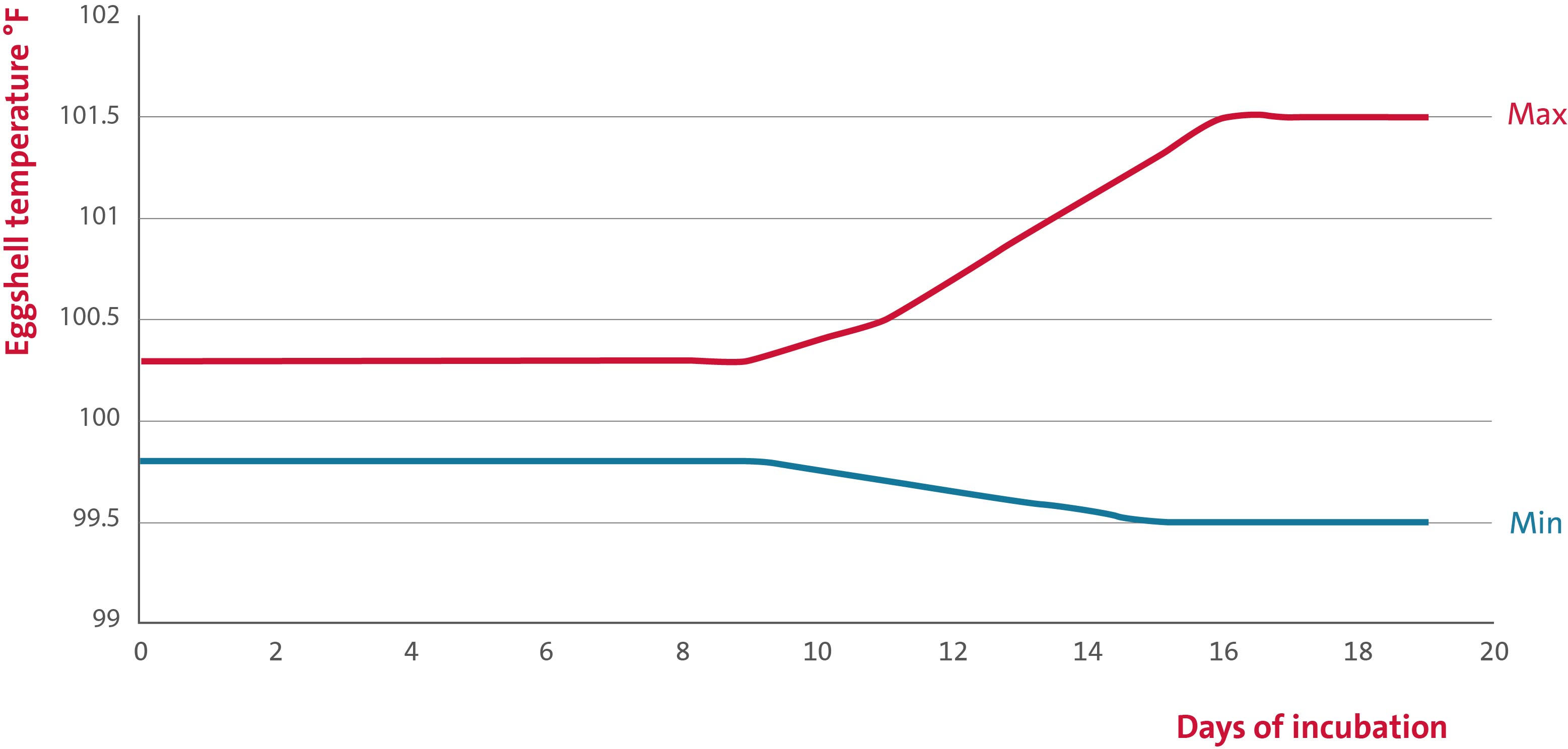
Figure 1: Acceptable boundaries of minimum and maximum eggshell temperatures.
Written by Lotte Hebbink
Incubation specialist
I welcome your feedback on this article - and if you require any additional information, please don't hesitate to contact me.