Incubator control: Sense – Think – Act
Tags: Incubation | Whitepaper
, 14 April 2026
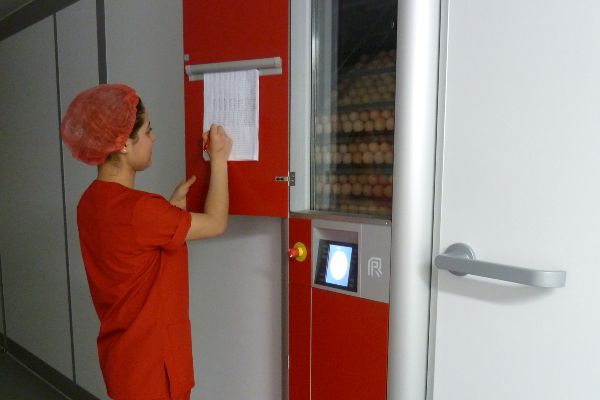
In most modern hatcheries, setters and hatchers are connected to a central computer system so that they can be monitored from the office or even home. If measured parameters such as temperature, relative humidity or CO2 level differ too much from the set point or if turning fails, an acoustic internal alarm is generated or the alarm goes external to on-duty staff. It is tempting to conclude that setters and hatchers could be left unattended, fully relying on the modern control systems calling for human intervention only in case of problems.
Physical inspection; ‘copy-paste’ or …?
While it remains good practice to physically check all setters and hatchers at least twice a day, the big question is how to ensure a malfunctioning setter or hatcher is recognised in time, so that action can be taken before the problem worsens and affects hatch results. In many hatcheries, the climate values as seen on the display are simply written on a record sheet. Does this ‘copy-paste’ action make any sense, bearing in mind that the computer system logs these values multiple times per hour? Do staff members really think when they copy-paste, or are they working like robots?
For example, rather than recording 99.9 °F or 57 %RH, you could design a form on which ‘OK’ or ‘not OK’ is recorded. On-duty staff can only choose between these two after carefully Sensing (Look; Listen; Feel; Smell) followed by thinking. To give some examples:
- Temperature: is the temperature at or close to set point? Is heating or cooling equal in all sections and normal for this embryo age?
- Ventilation: is … % damper opening with … ppm CO2 normal for this embryo age?
- Fan: is that sound and vibration normal?
- Turning: are all trolleys turned? Are there strange sounds during turning?
- General: leakages; normal smell?
This clearly requires some knowledge of embryo metabolism and incubation as well as of the technical aspects of setter and hatcher.
Act if 'not OK'
If ‘not OK’ is recorded, the next step is to act to determine the cause of the problem and rectify it. This could mean that assistance is required from a technician. The problem may be caused by a faulty sensor, for example, or a clogged strainer, blocked valve, burned fuse or loose screw. Perhaps the problem is caused by an external factor such as a low cooling-water pressure or a malfunctioning air handling unit. Such problems could also affect other setters and hatchers, which means the sooner action is taken, the better!
Advise
- Implement the ‘sense-think-act’ philosophy rather than ‘copy-paste’; ideally not only for controlling setters and hatchers but also for all other equipment and processes in the hatchery. For example, check chick comfort in hatchers and during processing rather than recording room temperature.
- Train your staff to recognise abnormalities in setter and hatcher behaviour at an early stage.
- Have your staff sign their name on the recording form; this could be used to improve training if a problem was not recognised in time.
- Prevent problems during incubation with proper preventive maintenance, including a thorough pre-load check before each new cycle.
Written by Gerd de Lange
Senior Poultry Specialist
I welcome your feedback on this article - and if you require any additional information, please don't hesitate to contact me.